This article is educational and does not provide medical advice. If you notice new distortion, blind spots, sudden central vision changes, or rapid changes in vision, schedule an eye examination with an eye care professional.
1. What Was Approved?
On July 24, 2026, Outlook Therapeutics announced that the US Food and Drug Administration approved LYTENAVA™ (bevacizumab-vikg) for neovascular age-related macular degeneration, commonly called wet AMD.
The company describes it as the first and only FDA-approved ophthalmic formulation of bevacizumab for wet AMD in the United States. It is an anti-VEGF medicine developed for injection into the eye and is administered in specialist care. Approval confirms a regulated indication and label; it does not determine whether the treatment is appropriate for any particular person.
2. What Is Wet AMD?
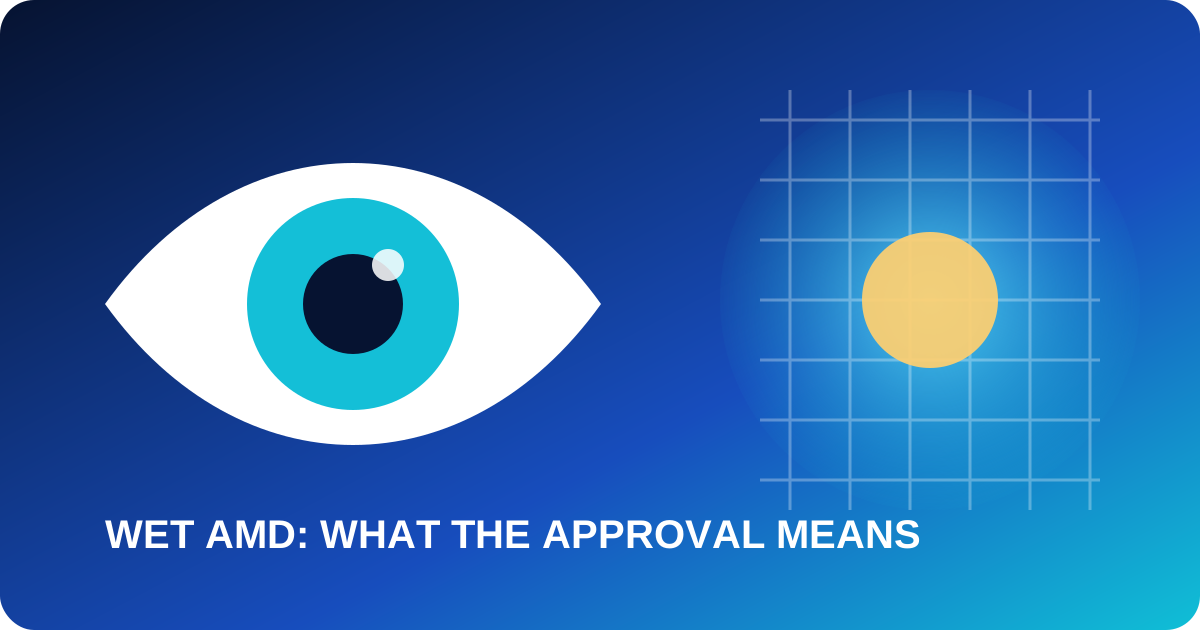
Age-related macular degeneration affects the macula, the part of the retina responsible for sharp, straight-ahead vision. The National Eye Institute explains that wet AMD is a less common, late form of AMD in which abnormal blood vessels grow in the back of the eye and can damage the macula.
Wet AMD can cause faster central vision loss than the more common dry form. Possible warning signs include straight lines appearing wavy or crooked, a blurry area in the center of vision, or blank spots. Diagnosis requires an eye examination; symptoms alone cannot establish the cause.
3. Reading Blur After 50 Can Mean Different Things
Difficulty reading small print becomes common with age, but “blur” is a description—not a diagnosis. Gradual near-focus difficulty may reflect presbyopia. Fluctuating blur with irritation may occur with dry-eye symptoms. Cataract, an outdated prescription, medication effects and retinal conditions are among other possibilities.
Wet AMD is therefore not the automatic explanation for ordinary reading blur after 50. What matters is the pattern: gradual or sudden, one eye or both, near vision only or central vision at every distance, stable or rapidly changing.
4. Presbyopia vs Dry Eye vs Wet AMD
| Situation | Could Be | What To Do |
|---|---|---|
| Small print is gradually harder to focus on, especially up close | Presbyopia or an outdated prescription | Arrange a routine eye examination and check the correct near prescription. |
| Blur fluctuates, particularly with screens, with burning or gritty discomfort | Dry-eye symptoms or another ocular-surface issue | Discuss persistent symptoms with an eye care professional rather than self-diagnosing. |
| Straight lines look wavy, a central area looks distorted, or a blank spot appears | A retinal or macular problem, including possible late AMD | Contact an eye care professional promptly for examination. |
| Central vision changes suddenly or deteriorates rapidly | An urgent eye problem with several possible causes | Seek prompt professional eye assessment. |
The comparisons above are orientation only. Symptoms overlap, and only an examination can identify the cause.
5. When To Schedule an Eye Exam
Schedule an eye examination when reading blur is new, persistent, affecting one eye more than the other, or interfering with daily tasks. Seek prompt assessment for new distortion, blind or blank spots, sudden central vision changes, or rapid deterioration.
Regular dilated eye examinations also matter because early AMD may have no obvious symptoms. An eye care professional may use a dilated examination and, when appropriate, retinal imaging such as optical coherence tomography.
6. Final Takeaway
The approval announced by Outlook Therapeutics adds an FDA-approved ophthalmic bevacizumab option for people diagnosed with wet AMD. It does not turn ordinary age-related reading blur into an AMD diagnosis, and it does not replace individualized examination and treatment decisions.
If you notice distortion, blind spots, sudden central vision changes, or rapid changes in vision, schedule an eye examination with an eye care professional.
Sources
- Outlook Therapeutics — “Outlook Therapeutics Announces LYTENAVA™ FDA Approval as the First and Only FDA-Approved Ophthalmic Bevacizumab for the Treatment of Wet AMD,” July 24, 2026.
- National Eye Institute — Age-Related Macular Degeneration (AMD).
Source information was checked July 25, 2026. The Outlook source is a company announcement; treatment decisions belong with a qualified eye care professional.